

Common Health Problems: Causes, Prevention & When to See a Doctor
Admin User
Author
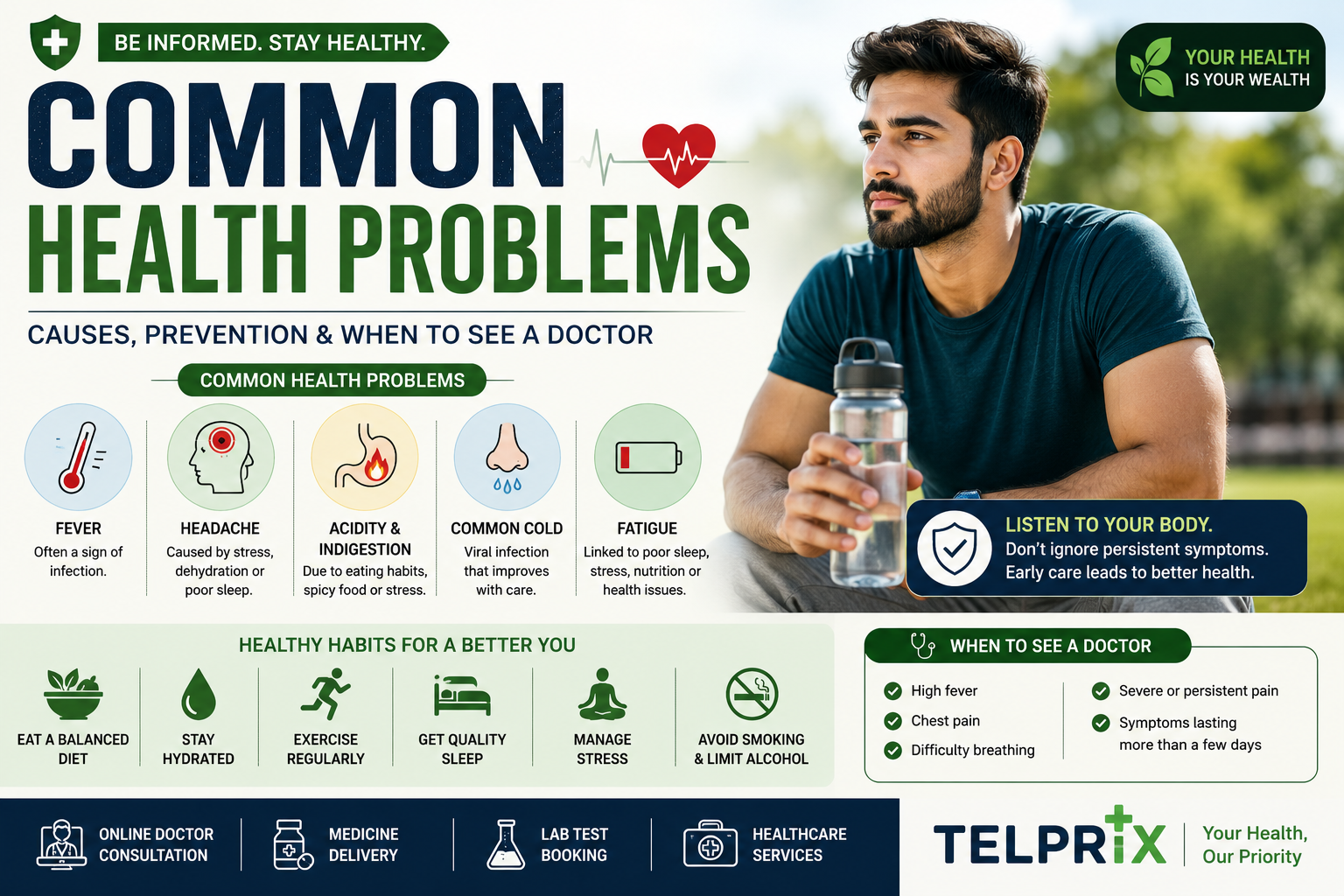
🤒 1. Fever
A fever is usually a sign that your body is fighting an infection.
Common causes:
Viral infections
Flu
Bacterial infections
What you can do:
Drink plenty of fluids 💧
Get adequate rest 😴
Monitor your temperature
Seek medical attention if the fever is very high, lasts more than three days, or is accompanied by severe symptoms.
🤕 2. Headache
Most headaches are caused by stress, dehydration, poor sleep, or eye strain.
Helpful tips:
Stay hydrated
Sleep 7–8 hours
Take regular screen breaks
Manage stress
A sudden or severe headache should always be evaluated by a doctor.
🍽️ 3. Acidity & Indigestion
Eating too quickly, spicy foods, or overeating can trigger acidity.
Prevent it by:
Eating smaller meals
Avoiding late-night eating
Limiting oily and spicy foods
Drinking enough water
🤧 4. Common Cold
The common cold is usually caused by viruses and often improves within a week.
Support your recovery:
Rest well
Stay hydrated
Eat nutritious foods
Wash your hands regularly
😴 5. Fatigue
Feeling tired all the time isn't always normal.
It may be linked to:
Poor sleep
Stress
Poor nutrition
Underlying medical conditions
Persistent fatigue should be discussed with a healthcare professional.
💚 Healthy Habits for Everyday Wellness
Small lifestyle changes can make a big difference.
✅ Eat a balanced diet
🏃 Stay physically active
💧 Drink enough water
😴 Get quality sleep
🧘 Manage stress
🚭 Avoid smoking and limit alcohol
👨⚕️ When Should You Visit a Doctor?
Seek professional medical advice if you experience:
Symptoms lasting more than a few days
High fever
Chest pain
Difficulty breathing
Severe or persistent pain
Unexplained weight loss
Early diagnosis often leads to better treatment outcomes.
🌟 Why Choose Telprix?
Healthcare should be simple, reliable, and accessible.
At Telprix, you can:
👨⚕️ Consult qualified doctors online
💊 Order medicines from the comfort of your home
🧪 Book diagnostic lab tests
📚 Read trusted health blogs
🏥 Access convenient healthcare services—all in one place.
Related Articles

Vitamin B12 Deficiency: Symptoms, Causes, Foods & Prevention Tips
Discover natural ways to prevent vitamin B12 deficiency with B12-rich foods, healthy habits, and practical tips for men, women, and kids.

How Homeopathic Medicines Support Preventive Health: Benefits, Evidence & Everyday Wellness
Preventive healthcare is the cornerstone of a healthy life, combining balanced nutrition, regular exercise, quality sleep, stress management, and timely medical care. Alongside these evidence-based practices, many people choose homeopathy as a complementary approach to support their overall wellbeing. While homeopathic medicines are widely used for individualized care and holistic wellness, they should complement—not replace—proven preventive measures such as vaccinations, routine health screenings, and professional medical advice. Discover how homeopathy fits into an integrative approach to preventive health, what current scientific evidence says, and practical steps you can take to maintain long-term wellness.

Homeopathic Medicines for Viral Cold and Cough: Benefits, Evidence, Safety & When to See a Doctor
Homeopathic medicines continue to be used by many people for viral cold and cough because of personal preference, cultural tradition, or interest in complementary medicine. However, the best available scientific evidence does not demonstrate that homoeopathic remedies treat or cure viral respiratory infections. Most uncomplicated viral colds recover with supportive care, including hydration, rest, and symptom management. If symptoms become severe or fail to improve, consult a qualified healthcare professional promptly.